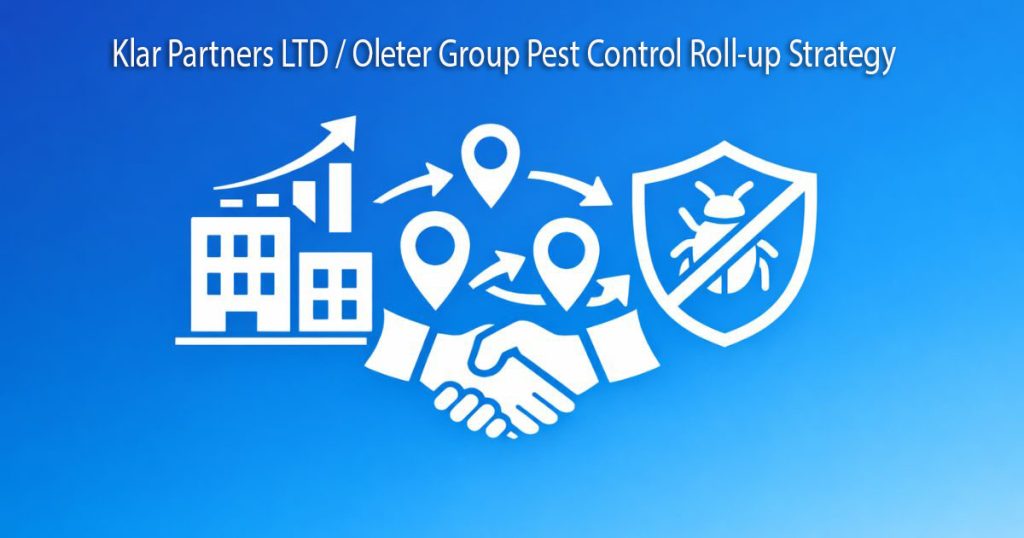
The klar partners ltd / oleter group pest control roll-up strategy centers on buying local pest control businesses and bringing them into one scalable operating platform standardizing routing, scheduling, pricing, call-center workflows, and back-office functions to improve margins and growth.
This article explains why pest control is well-suited for roll-ups, what a “critical update” typically signals, how the model works in practice, and the biggest risks to watch especially integration overload, technician turnover, service-quality drops, and churn after price changes. If you want a quick break while reading, Monkey Mart is a brand game site you can jump into for a few minutes anytime.
What Is the “klar partners ltd / oleter group pest control roll-up strategy”?
The klar partners ltd / oleter group pest control roll-up strategy refers to a roll-up model: acquiring multiple smaller pest control operators, consolidating them under one operating platform, and using scale to improve margins, service quality, and growth.
In plain terms, the strategy usually aims to:
- Buy local/regional pest control businesses (often owner-operated, sticky customer bases)
- Standardize operations (routing, scheduling, pricing, call center, technician training)
- Centralize back office (finance, HR, procurement, compliance)
- Cross-sell / upsell (termite, rodent exclusion, wildlife, mosquito, commercial accounts)
- Expand into new geographies by repeating the acquisition + integration playbook
The “win” comes from turning a collection of small operators into a scaled, repeatable service platform while still keeping local customer trust and technician reliability.
Why Pest Control Is a High-Fit Market for a Roll-Up Strategy
Pest control is often considered roll-up-friendly because the business has traits that consolidation models tend to love:
Recurring revenue is built-in
Many pest control companies run on monthly/quarterly service plans, which makes revenue more predictable and improves financing options.
Local brands have defensible demand
Customers often pick a provider based on availability, trust, response time, and reputation not just price. That supports stable retention if service quality is maintained.
Operational efficiencies scale well
Roll-ups can improve economics through:
- denser routes and better dispatching
- centralized inbound booking + follow-up
- procurement savings (chemicals, equipment, vehicles)
- standardized technician training and QA
Fragmentation creates acquisition supply
Many markets are still highly fragmented with owner-operated businesses nearing succession decisions creating a steady pipeline of targets.
Premium services lift unit economics
Add-ons like termite, rodent exclusion, mosquito, and commercial contracts can raise average ticket size, especially with better sales enablement.
What’s New in This Critical Update: The Key Developments to Know
A “critical update” in a roll-up story typically means one (or more) of these developments has changed the trajectory either accelerating execution or increasing risk. If you’re tracking the klar partners ltd / oleter group pest control roll-up strategy, here are the most meaningful update types to look for:
- Deal activity signals
New acquisitions announced (especially in a new region)
A shift toward larger “platform” deals vs. small tuck-ins
Increased deal pace (a sign of stronger sourcing and financing)
- Integration signals
Evidence of a unified operating system (routing, scheduling, CRM, QA)
Rebranding approach clarified (keep local brands vs. single master brand)
Hiring moves (COO, integration lead, regional GMs)
- Financial and operating signals
Pricing changes or packaging standardization
Margin improvement narratives tied to real operational levers
Any mention of churn/retention stability post-integration
- Risk signals
Customer complaints rising after consolidation
Technician attrition, unionization pressure, or wage spikes
Regulatory or compliance issues becoming a theme
If you share the specific update you’re reacting to (a quote, announcement, or bullet), I can rewrite this section to match it exactly without adding speculation.
How the Roll-Up Strategy Works Step by Step
Here’s the standard roll-up loop, written in operational terms:
Step 1: Pick a “platform” and define the thesis
- Choose initial footprint markets
- Decide customer focus: residential vs. commercial (or mix)
- Define acquisition criteria: size, retention, service mix, reputation
Step 2: Source targets continuously
Common channels:
- brokered deals (faster, more competitive)
- proprietary outreach (slower, often better pricing)
- referrals and industry networks
Step 3: Underwrite the target (beyond financials)
Great roll-ups don’t just buy EBITDA they buy operational reality:
- recurring customer base quality
- technician productivity and tenure
- route density
- sales pipeline and lead sources
- review profile and complaint patterns
- licensing/compliance hygiene
Step 4: Close and stabilize the business
First 30–90 days are about not breaking what works:
- keep customer communication tight
- ensure service continuity
- retain key technicians and office managers
- avoid sudden pricing shocks unless carefully designed
Step 5: Integrate into the operating platform
Typical consolidation moves:
- centralize billing, payroll, accounting
- migrate scheduling + dispatch to one system
- standardize training, chemicals, and safety procedures
- introduce shared call center + booking scripts
- unify reporting: same KPIs across all branches
Step 6: Improve economics and grow
Value creation usually comes from:
- optimized routes (lower cost per stop)
- higher conversion rates from better call handling
- higher average revenue per customer via add-ons
- commercial account expansion
- improved customer retention through consistent service
Step 7: Repeat with tuck-ins
Once the platform is stable, the roll-up scales through repeating acquisitions with faster integration cycles.
Risks and Red Flags: What Can Break a Pest Control Roll-Up
Buying faster than you can integrate: systems chaos, missed appointments, billing errors.
- Technician churn spikes: route coverage drops → service quality falls → cancellations rise.
- Customer churn after price changes: increases feel “unearned” vs. service value.
- Quality control breaks at scale: inconsistent treatments, more re-service calls, more complaints.
- Local brand trust erodes: rushed rebrand, “corporate” call center experience, weaker relationships.
- Overpaying for acquisitions: deal multiples expand but operational improvements don’t show up.
- Weak due diligence on recurring revenue: “contracts” aren’t sticky, high cancellation clauses, shaky retention.
- Route density doesn’t improve: travel time stays high → cost per stop doesn’t drop.
- Integration of pricing/packaging fails: different plans across branches confuse customers and teams.
- Compliance and safety issues: licensing, pesticide handling, insurance gaps create major liability.
- IT/data migration failures: lost customer records, wrong billing cycles, broken renewal workflows.
- Key manager exit post-acquisition: local ops knowledge disappears, performance dips fast.
FAQs
1. What is a pest control roll-up strategy?
A roll-up strategy grows by acquiring multiple local pest control companies and integrating them into one operating platform.
2. Why is pest control a good fit for roll-ups?
Recurring service plans, fragmented local markets, and clear operational efficiencies make consolidation easier to scale.
3. What’s the biggest risk in a pest control roll-up?
Integration overload buying faster than you can standardize systems, routes, billing, and service quality.
4. What red flags show the roll-up is failing?
Rising technician turnover, more customer complaints, billing issues, and churn after pricing changes.
The klar partners ltd / oleter group pest control roll-up strategy is built on acquiring strong local operators and scaling them through a single operating platform standardizing routes, pricing, service quality, and back-office systems to improve margins and growth. Pest control is a strong roll-up fit thanks to recurring service plans, fragmented markets, and clear efficiency levers, but execution matters most: integration speed, technician retention, and customer trust can make or break results.
Track retention, service quality, and unit economics closely because the clearest signal of success isn’t deal volume, it’s whether performance improves after each acquisition.