Your Topics Multiple Stories is a multi-narrative content strategy that strengthens SEO by covering one core topic through multiple connected perspectives. Instead of a single linear article, it integrates expert insights, case studies, data, and contextual analysis to capture diverse search intent and increase engagement. Much like how a game such as Monkey Mart keeps users engaged through layered experiences, this approach keeps readers exploring through structured, interconnected storytelling.
What Is “Your Topics Multiple Stories”?
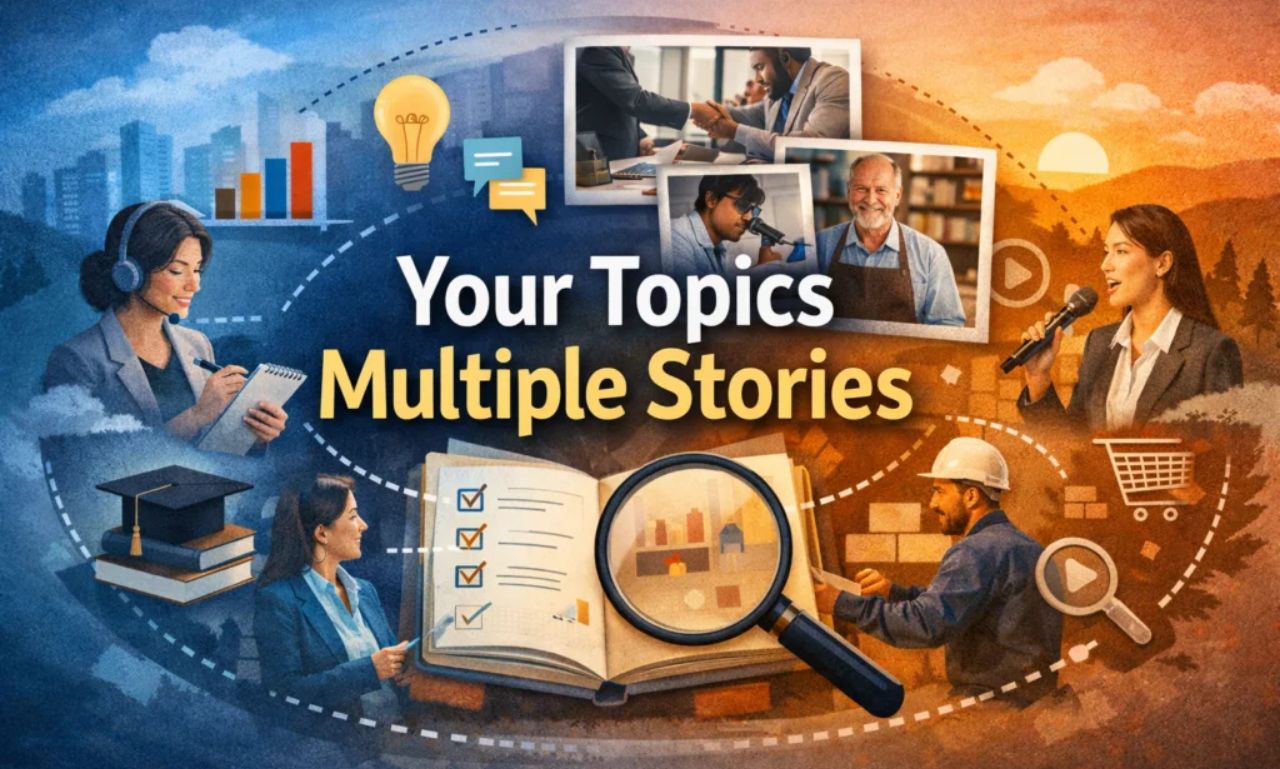
Your Topics Multiple Stories is a content strategy that focuses on covering one central topic through multiple unique angles, perspectives, or narratives instead of presenting a single linear story.
Rather than publishing one general article, this approach breaks a topic into related sub-stories such as expert opinions, case studies, data insights, user experiences, and trend analysis within the same content ecosystem.
The goal is to:
- Provide deeper topical authority
- Increase audience engagement
- Capture multiple search intents
In short, your topics multiple stories transforms one core subject into a structured collection of interconnected narratives that deliver more value than a single-perspective article.
What Does Multi-Narrative Content Mean in Digital Publishing?
Multi-narrative content in digital publishing refers to presenting one central topic through multiple connected perspectives rather than a single linear explanation. It combines different angles such as expert insights, user experiences, data analysis, and contextual background into one cohesive content structure.
This approach helps publishers address multiple search intents within the same topic. Readers may be looking for definitions, comparisons, practical examples, or deeper analysis, and multi-narrative content satisfies these needs in a unified format.
In digital environments driven by SEO and AI search, multi-narrative content strengthens topical authority, increases engagement, and improves content depth making it more competitive than single-perspective articles.
Why Does Multi-Narrative Content Perform Better Than Single-Story Formats?
- Captures Multiple Search Intents – Addresses informational, comparative, and analytical queries within one topic.
- Increases Engagement Time – Readers explore different angles, boosting dwell time and reducing bounce rate.
- Builds Stronger Topical Authority – Covers a subject comprehensively, signaling expertise to search engines.
- Improves SEO Depth – Naturally integrates related keywords and semantic variations.
- Enhances User Experience – Provides diverse perspectives that match different reader needs.
- Supports AI & Featured Snippets – Structured, layered content is easier for AI systems to interpret and surface.
- Encourages Internal Linking – Connects subtopics strategically, strengthening site structure.
How Does the Your Topics Multiple Stories Strategy Increase Engagement?
Captures Different Audience Interests Within One Topic
The strategy increases engagement by presenting multiple angles of the same topic. Different readers connect with different narratives some prefer data, others case studies or expert insights so covering varied perspectives keeps more users interested.
Extends Time on Page Through Layered Content
By structuring content into interconnected sections, readers are encouraged to continue exploring. Each sub-story builds curiosity and naturally leads to the next, increasing dwell time and reducing bounce rate.
Encourages Deeper Interaction and Exploration
Multiple narratives create opportunities for internal linking, related articles, and supporting media. This ecosystem approach motivates users to click, scroll, and explore beyond a single viewpoint.
Builds Emotional and Intellectual Connection
When a topic includes diverse perspectives real experiences, analysis, and context it resonates on both emotional and logical levels. This combination strengthens reader trust and increases the likelihood of sharing or returning for more content.
When Should You Use the Multiple Stories Approach?
You should use the multiple stories approach when a topic has layered complexity or serves different audience intents. If readers may search for definitions, comparisons, expert opinions, case studies, or practical applications around the same subject, a multi-narrative structure helps address all those needs within one cohesive framework.
This approach is especially effective for competitive SEO topics, evergreen guides, industry analysis, and content hubs where building topical authority matters. When your goal is to increase engagement, improve dwell time, and strengthen search visibility, the multiple stories model becomes a strategic advantage.
FAQs
1. When should I use a multi-narrative approach?
Use it for complex, competitive, or evergreen topics where readers need different angles such as analysis, examples, and expert insights.
2. How is it different from a single-story format?
Single-story content focuses on one perspective, while multi-narrative content integrates several viewpoints under one structured framework.
3. Does multi-narrative content increase engagement?
Yes. It encourages longer reading time, deeper exploration, and higher interaction across related sections.
Conclusion
Your Topics Multiple Stories is a strategic content model that transforms one core subject into multiple connected narratives to maximize depth, engagement, and SEO performance. By addressing diverse search intents within a single structured framework, it builds stronger topical authority and improves user experience.
Compared to single-story formats, multi-narrative content increases dwell time, supports AI-driven search visibility, and strengthens internal linking. When applied to competitive or evergreen topics, this approach becomes a sustainable strategy for long-term traffic growth and higher content relevance.